
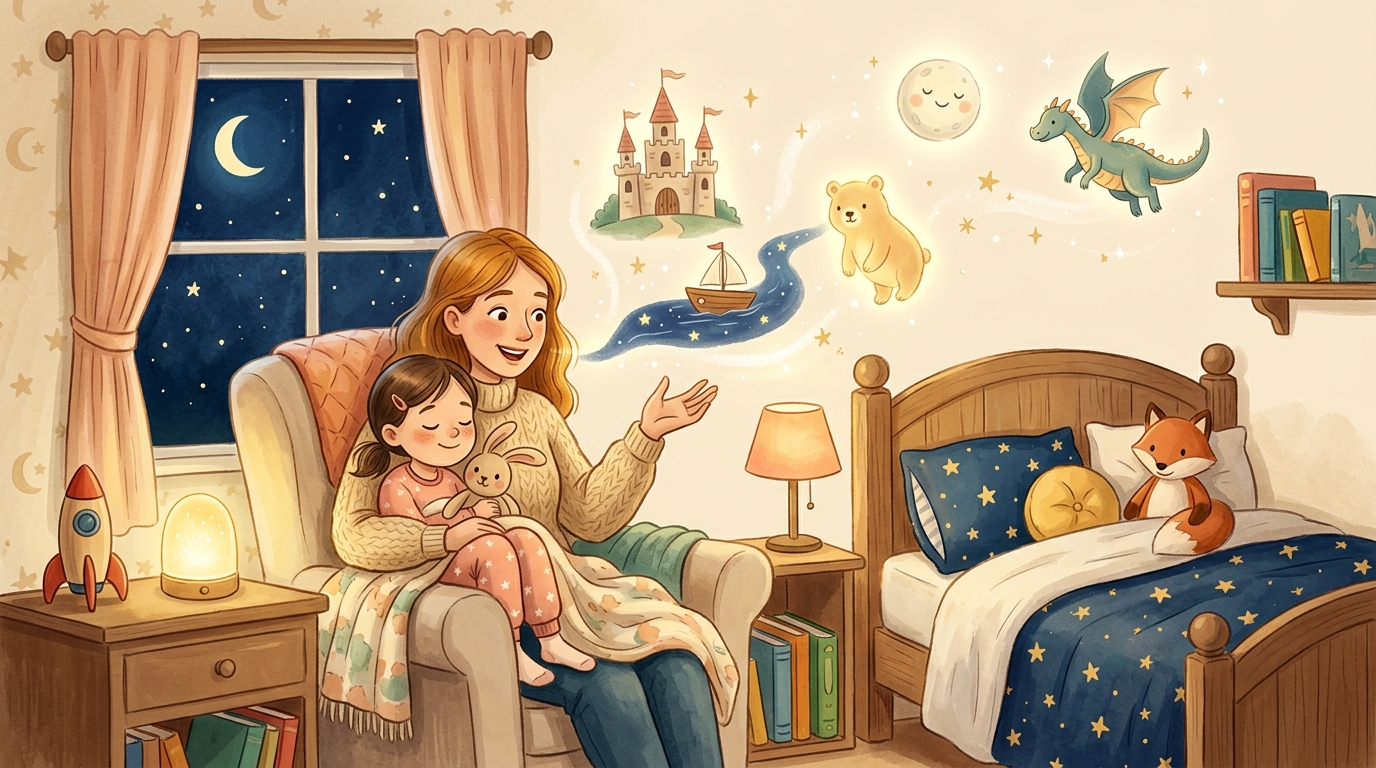
You can make up a bedtime story on the fly by using a simple three-part formula: pick a familiar character, introduce a small, easily solvable problem, and end with a calm resolution. Avoid complex plots or scary villains. If you are too tired to invent a story, AI tools like StarryTalez can generate a personalized draft from a single sentence in seconds.
It is 8:00 PM. You are exhausted. Your child looks up and asks, "Can you tell me a story from your mouth, not a book?" Making up a bedtime story on the fly can feel intimidating, but you do not need to be a creative writer. You just need a reliable formula that works when your brain is running on empty. Understanding 10 reasons why reading aloud matters can remind you why this small effort is worth it.
What is the easiest formula for making up a bedtime story?
The easiest formula for an improvised bedtime story is Character + Small Problem + Calm Solution. Keep the stakes low and the emotions gentle. A child winding down for sleep does not need an epic quest or a terrifying villain; they need a predictable narrative arc that feels safe.
Start with a character your child already knows, like their favorite stuffed animal or a friendly version of a neighborhood pet. Give that character a very mild challenge, such as losing a favorite blanket or trying to find the best place to nap. Resolve the problem quickly with the help of a friend, and end the story with the character falling asleep.
Why should you avoid complex plots at bedtime?
Complex plots stimulate the brain, which is the exact opposite of what a bedtime routine should achieve. When you introduce high stakes, scary monsters, or complicated mysteries, your child's cognitive engagement increases. They will ask questions, worry about the outcome, and stay awake to find out what happens next.
A bedtime story should act as a bridge to sleep. The narrative should slow down as it progresses. By keeping the plot simple and the conflicts minor, you allow your child to relax into the rhythm of your voice. Pairing your story with a calm bedtime routine that ends with a story makes the transition to sleep even smoother.
How can you involve your child in the storytelling process?
You can involve your child by offering them two simple choices at the beginning of the story. Ask, "Should tonight's story be about a brave little bear or a sleepy owl?" Giving them a choice provides a sense of ownership over the routine without derailing the process.
Once the story begins, do not ask open-ended questions like "What happened next?" as this forces them to think actively. Instead, pause occasionally to let them fill in a familiar detail, such as the color of the bear's hat or the name of the owl's best friend.
What are some easy story prompts to use tonight?
If you need inspiration right now, use one of these low-stakes scenarios. You can adapt the character to fit your child's current interests.
| Character | Small Problem | Calm Solution |
|---|---|---|
| A little fox | Cannot find a quiet place to sleep because the crickets are too loud | A wise owl shows the fox a cozy, silent cave under a big oak tree |
| A sleepy cloud | Keeps floating away from the other clouds | The moon gently ties the cloud to a star so it can rest |
| A brave puppy | Wants to stay up and guard the house | The puppy realizes the house is safe and falls asleep on the rug |
| A tiny boat | Is bobbing too much in the waves | The boat sails into a quiet harbor and drops its anchor for the night |
What if you are too tired to invent a story?
When you are too tired to invent a story, you can use a personalized story generator like StarryTalez. You do not need to think of a plot; you only need to provide one sentence about what your child likes or what they did that day. If the story touches on a feeling your child is working through, how AI tools help match a story to your child's emotional moment explains how that works in practice.
For example, you can type, "A story about a little girl named Maya who loves her stuffed bunny." The AI will generate a complete, gentle bedtime story in seconds. You still get to read it aloud and share that bonding moment, but the creative heavy lifting is done for you. If you want a ready-made personalized story where your child is the hero, StarryTalez has that too.
Try StarryTalez Free
Create a personalized story in minutes.
Frequently Asked Questions
How long should an improvised bedtime story be?
An improvised bedtime story should be between three and five minutes long. This is long enough to establish a calming rhythm but short enough that you will not run out of ideas or lose your child's attention.
What should I do if my child interrupts the story with questions?
Acknowledge the question briefly, then gently guide the narrative back to the main path. You can say, "That is a great question, maybe we will find out tomorrow. But right now, the little bear is getting very sleepy."
Is it okay to tell the same made-up story every night?
Yes, it is perfectly fine and often beneficial. Children thrive on repetition, especially at bedtime. Hearing the same story provides comfort and predictability, which helps them relax and transition into sleep.
How can I make my voice sound more engaging when telling a story?
Lower your pitch slightly and speak slower than your normal conversational pace. You do not need to do elaborate character voices; simply speaking softly and pausing frequently creates a soothing, hypnotic effect that encourages sleep.
Story recommendations for tonight
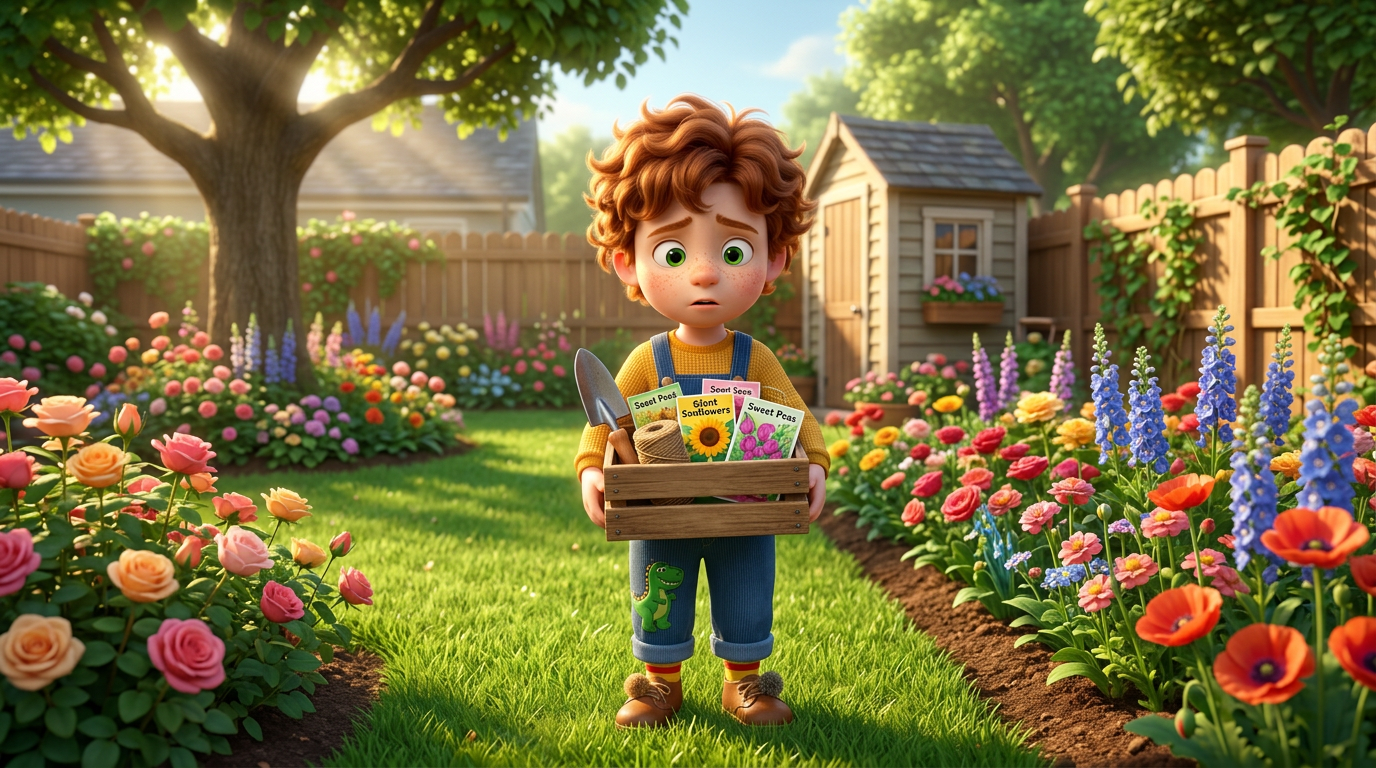
The Dinosaur Garden
A child imagines tiny dinosaurs helping seeds, leaves, and flowers grow.
5 min read
The Duckling’s New Friend
A duckling discovers that making a new friend can begin with one tiny shared moment.
4 min read
Little Otter Fell Asleep Holding Moonlight
Cradled by soft moonlight, Little Otter relaxes and slowly falls asleep.
3 min read