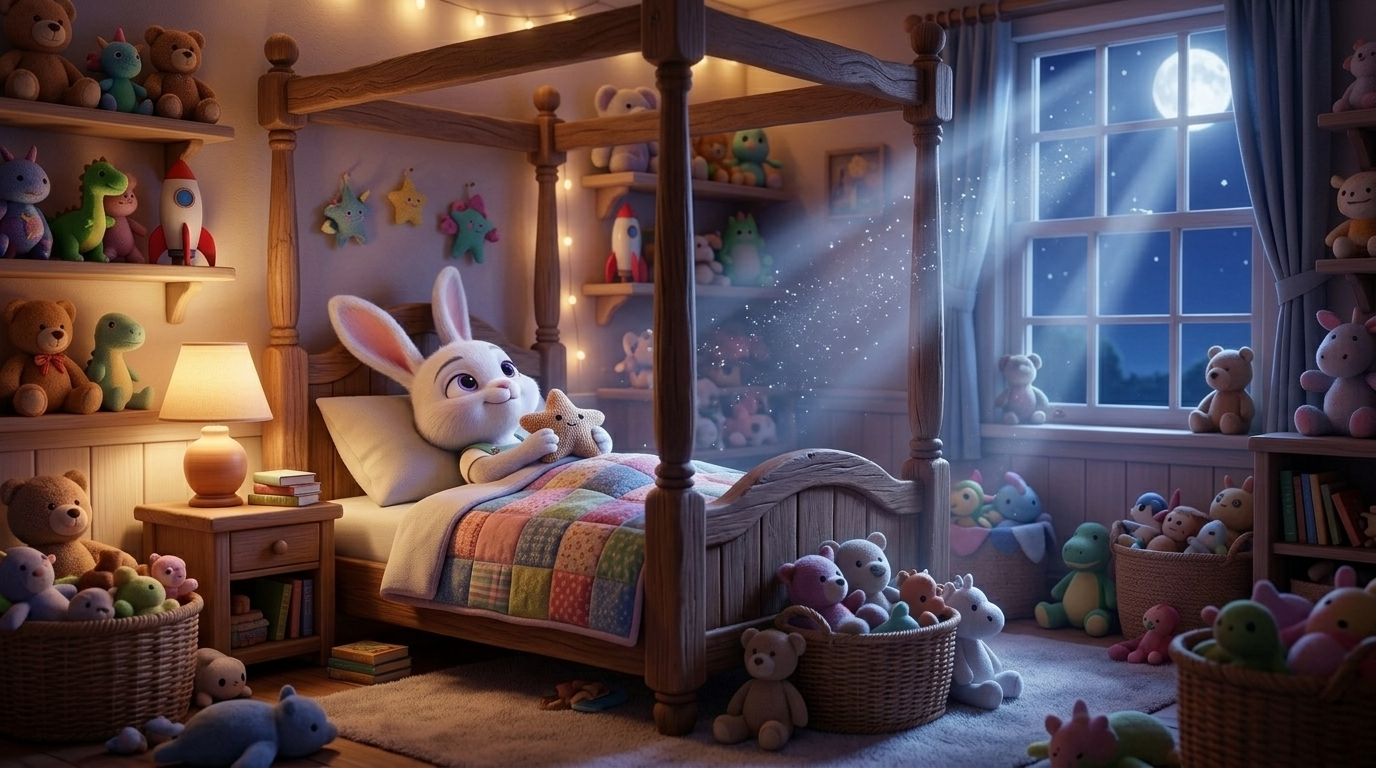
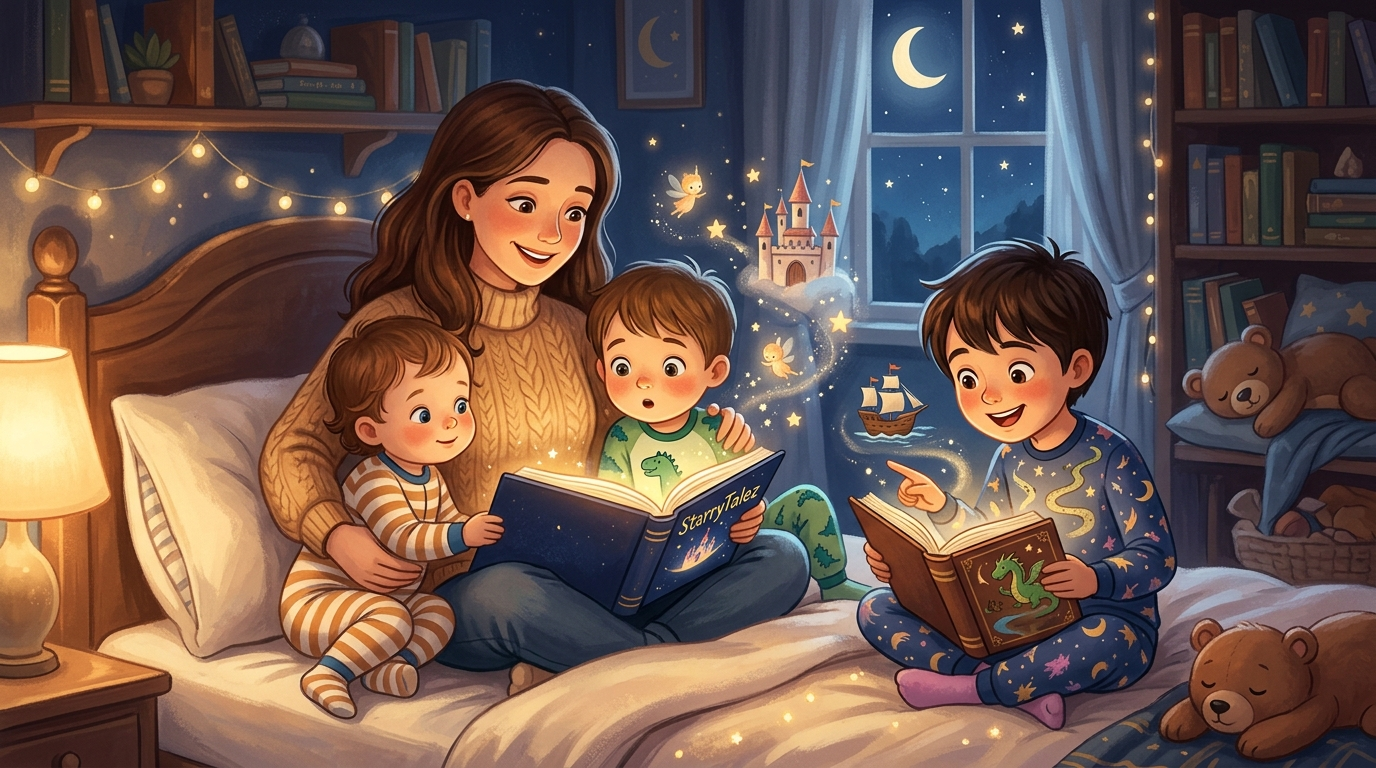
The best bedtime stories change as your child grows. Toddlers (ages 2–3) need short, repetitive stories about familiar routines. Preschoolers (ages 4–5) enjoy simple adventures and magical elements. Early elementary kids (ages 6–8) crave character development and mild challenges, while older kids (ages 9–10) want complex plots and moral dilemmas. Using AI tools like StarryTalez ensures you always have a story tailored to your child's exact developmental stage.
Reading the right story at the right age makes bedtime a joy rather than a struggle. A two-year-old will lose interest in a complex fairy tale, while an eight-year-old will roll their eyes at a simple rhyming book. As children grow, their cognitive abilities, emotional understanding, and attention spans evolve. This guide breaks down exactly what kind of bedtime stories work best for each age group. For a deeper look at why storytime matters at every stage, see the full benefits of reading aloud at every age.
What kind of bedtime stories work best for toddlers (Ages 2–3)?
Toddlers are concrete thinkers who are just beginning to understand the world around them. At this age, the best bedtime stories are highly predictable, short (3 to 5 minutes), and focused on familiar daily routines. They do not need complex plots; they need comfort and repetition.
Stories about animals getting ready for bed, children brushing their teeth, or familiar objects saying "goodnight" are incredibly effective. You can find a curated collection of 25 short, gentle stories for ages 1 to 4 to get started tonight. Pairing a short story with a 15-minute bedtime routine built for toddlers creates a predictable wind-down that helps the whole evening feel settled.
What themes engage preschoolers (Ages 4–5)?
Preschoolers have rapidly expanding imaginations and are beginning to understand cause and effect. They can handle slightly longer stories (5 to 8 minutes) and enjoy simple adventures. This is the perfect age to introduce gentle magical elements, like talking animals, friendly dragons, or enchanted forests.
At this stage, children are also navigating big social and emotional changes, such as making friends, sharing, and managing big feelings. Stories that mirror these experiences help preschoolers process their own emotions in a safe, comforting way. Classic fables and fairy tales for early readers are a natural fit for this age, offering simple moral frameworks wrapped in imaginative worlds.
How do story preferences change in early elementary (Ages 6–8)?
Children in early elementary school are developing a stronger sense of empathy and a clearer understanding of right and wrong. They are ready for stories that take 10 to 15 minutes to read and feature multiple characters, subplots, and mild challenges that must be overcome.
They enjoy narratives where characters face dilemmas, show courage, or solve mysteries. Stories that help children navigate big emotions are particularly effective at this age, when children are developing the vocabulary to articulate complex inner experiences. The key is to ensure that the conflict is always resolved positively by the end of the story so they can sleep peacefully.
What makes a good bedtime story for older kids (Ages 9–10)?
Older children and tweens have sophisticated vocabularies and can grasp abstract concepts and moral nuances. They want stories that respect their intelligence, featuring complex character motivations, epic quests, and relatable social dynamics like peer pressure or loyalty.
Even though they can read independently, reading aloud to this age group remains highly beneficial. It allows you to introduce them to rich, challenging literature and provides a springboard for meaningful conversations before lights out.
| Age Group | Ideal Length | Key Story Elements | Best Themes |
|---|---|---|---|
| Toddlers (2–3) | 3–5 mins | Repetition, simple vocabulary, familiar settings | Daily routines, saying goodnight, friendly animals |
| Preschoolers (4–5) | 5–8 mins | Simple cause/effect, gentle magic, emotional mirroring | Making friends, mild adventures, trying new things |
| Early Elem. (6–8) | 10–15 mins | Subplots, character growth, mild suspense | Problem-solving, courage, fantasy quests |
| Older Kids (9–10) | 15–20 mins | Complex plots, moral dilemmas, rich vocabulary | Epic adventures, real-world social challenges |
How can you easily adapt stories as your child grows?
Keeping up with your child's changing literary needs can be challenging, especially when their interests shift from week to week. This is where personalized AI story generators provide a massive advantage. Before choosing a platform, it is worth knowing whether AI story tools are safe for your child's age group — a quick checklist can help you make a confident decision.
With StarryTalez, you do not need to constantly buy new books to match their developmental stage. The AI automatically adjusts the vocabulary, plot complexity, and thematic depth based on the age you select. Whether your child needs a simple 3-minute story about a sleepy puppy or a 15-minute epic about a space explorer, you can generate the perfect, age-appropriate story in seconds.
Try StarryTalez Free
Generate a story perfectly matched to your child's age.
Frequently Asked Questions
Is it normal for my 4-year-old to want the same story every night?
Yes, it is completely normal and developmentally appropriate. Re-reading the same story gives preschoolers a sense of mastery and predictability, which is highly comforting at bedtime. You can slowly introduce new stories by reading the favorite one first, followed by a new, shorter one.
How do I know if a story is too scary for my child?
Pay attention to their physical reactions. If they are tense, asking anxious questions, or resisting sleep after the story, it may be too intense. For bedtime, it is always better to err on the side of gentle and reassuring, saving more exciting or suspenseful books for daytime reading.
Should I stop reading picture books to my 7-year-old?
Absolutely not. Many picture books contain sophisticated vocabulary, beautiful art, and complex themes that are perfect for 7- and 8-year-olds. Picture books are excellent for building visual literacy and can be enjoyed alongside chapter books.
My 9-year-old thinks bedtime stories are "babyish." What should I do?
Change the framing. Instead of calling it a "bedtime story," call it "reading together." Choose a compelling chapter book, a biography of someone they admire, or even an exciting fantasy novel, and read a chapter each night. It is about the shared experience, not the label.
How can I make reading aloud more engaging for a toddler with a short attention span?
Keep the stories very short, use expressive voices, and choose highly interactive content. Ask them to point to things on the page or make animal sounds. If you are using a generated story, make sure to include their name and favorite things to immediately capture their attention.
Story recommendations for tonight
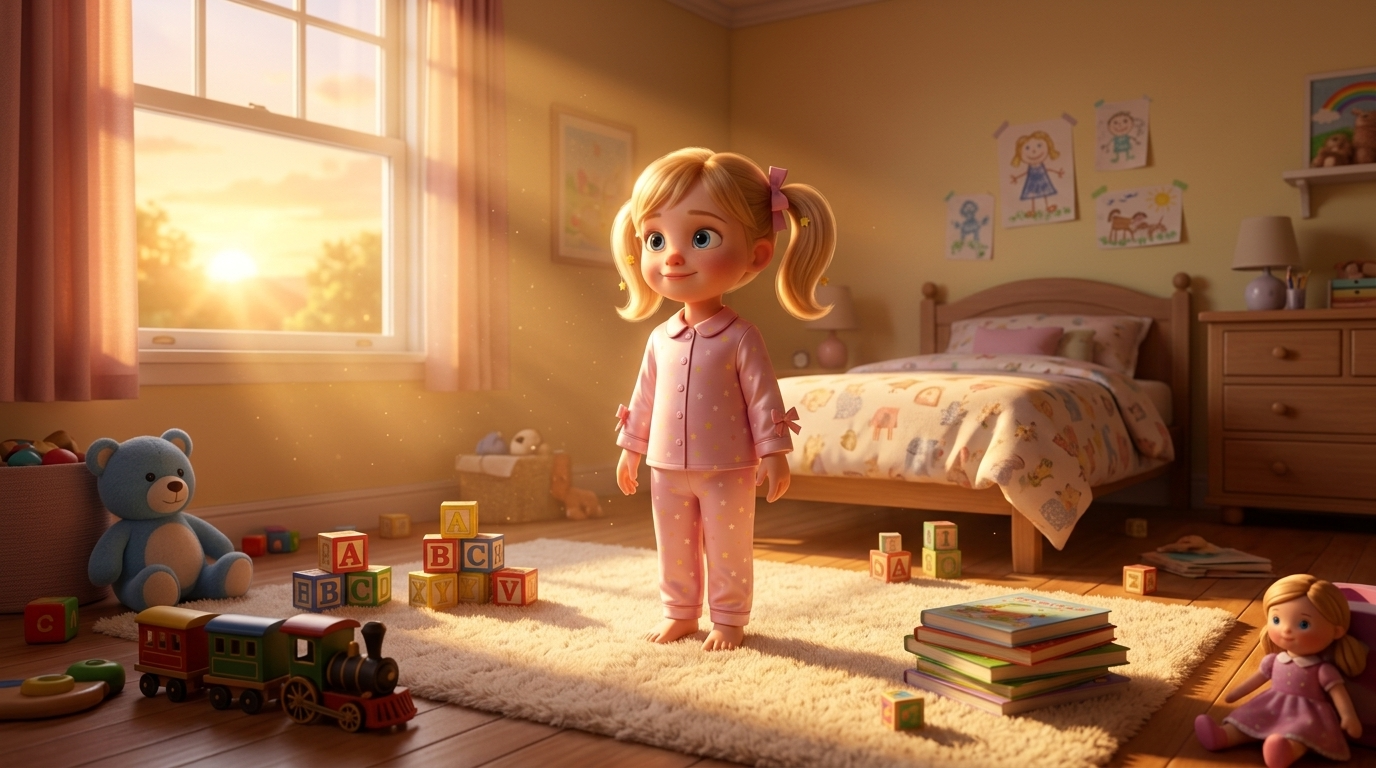
Goodnight, Toy Friends
One by one, a child says goodnight to beloved toys and brings a busy day to a peaceful close.
3 min read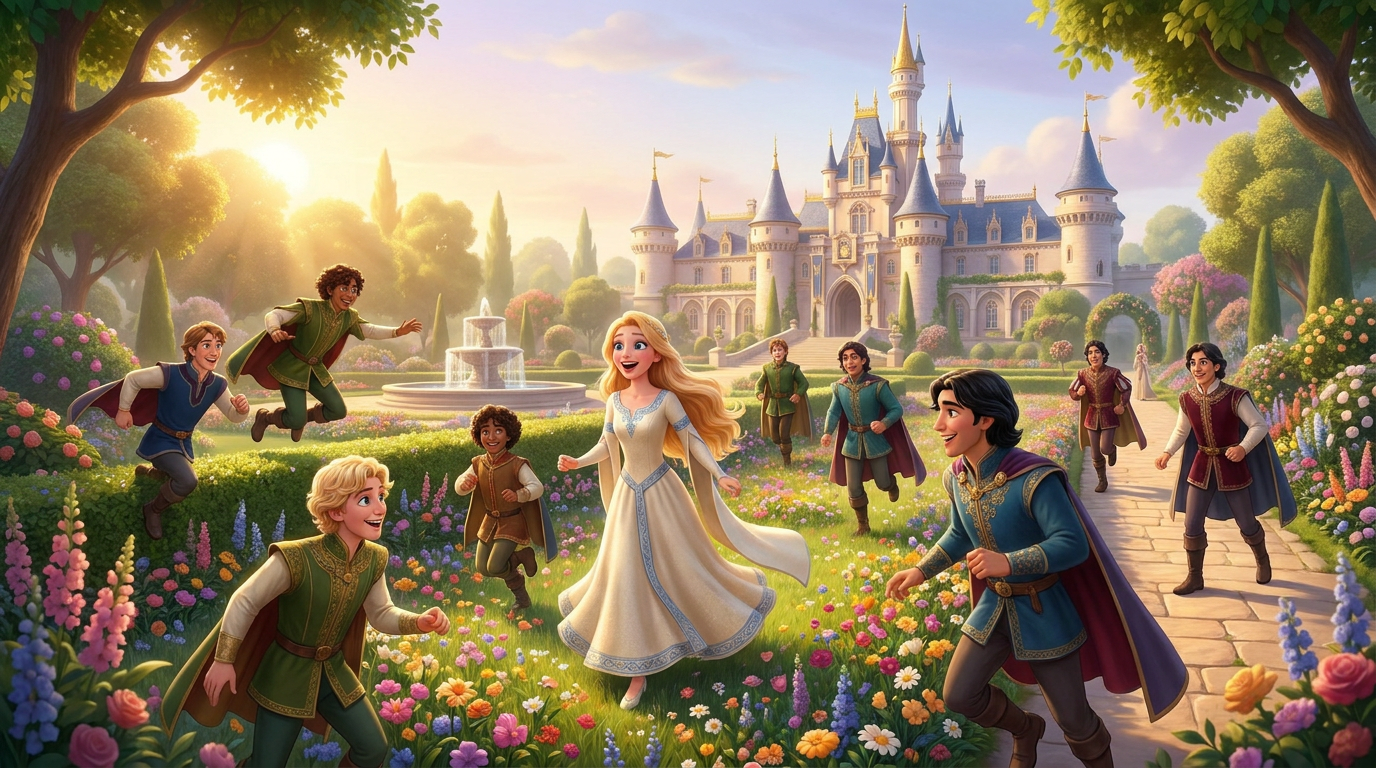
The Wild Swans
Princess Elisa sets out on a brave journey to save her eleven brothers, who have been turned into swans by an evil spell. Through love, patience, and unwavering determination, she breaks the curse and brings her family together again.
3 min read