
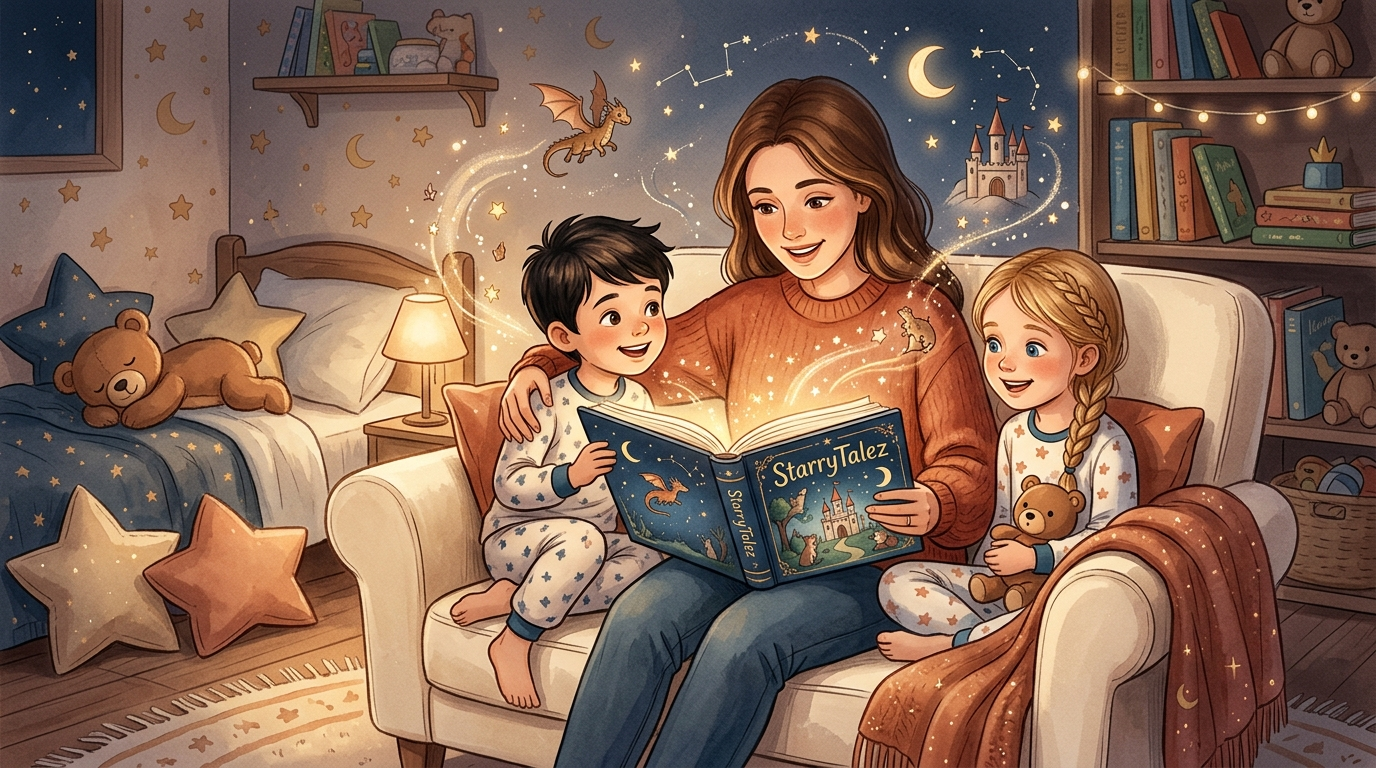
Reading aloud to children is one of the most effective ways to boost their cognitive, linguistic, and emotional development. It expands their vocabulary, improves focus, and builds empathy by exposing them to different perspectives. Even just 15 minutes a day can create a lifelong love of learning. For parents looking for fresh, engaging content, AI tools like StarryTalez can generate personalized stories that make reading aloud an exciting daily ritual.
Most parents know that reading to their children is "good for them," but the specific, measurable benefits go far beyond simply helping them fall asleep. Reading aloud is a foundational activity that shapes how a child's brain processes language, understands emotions, and interacts with the world. Here are ten science-backed benefits of reading aloud to your children, and why you should keep doing it even after they learn to read on their own.
1. How does reading aloud expand a child's vocabulary?
Reading aloud exposes children to a broader and richer vocabulary than they hear in everyday conversation. Books, even those written for young children, use "rare words" — words that fall outside the common lexicon used in daily life. When a parent reads these words in the context of a story, children naturally infer their meaning, rapidly expanding their language skills before they even enter a classroom.
2. Why does storytime improve attention span and focus?
In a world filled with fast-paced digital media, sitting still and listening to a story requires a child to practice sustained attention. They must focus on the narrative thread, remember character details, and follow the plot from beginning to end. Regular read-aloud sessions train the brain to concentrate for longer periods, a skill that directly translates to better focus in school.
3. How do stories build empathy and emotional intelligence?
Stories act as a safe simulator for real-life emotions. When children hear about a character who is scared, lonely, or joyful, they practice putting themselves in someone else's shoes. This exposure to different perspectives helps them develop empathy. How personalized stories use the self-referential encoding effect explains why stories that feature the child themselves deepen this emotional engagement even further.
4. Does reading aloud strengthen the parent-child bond?
Yes, the physical and emotional closeness of reading together creates a powerful bonding experience. The act of cuddling with a book lowers cortisol (stress) levels for both the parent and the child. This dedicated, uninterrupted time signals to the child that they are a priority. This bonding extends across generations too — how grandparents create personalized stories for grandchildren shows how the same ritual can bridge distance and keep families close.
5. How does listening to stories enhance listening skills?
Before a child can read independently, they must learn how to listen actively. Reading aloud trains children to process spoken information, pick up on vocal cues, and understand tone and inflection. Strong listening skills are crucial for academic success, as much of early education is delivered verbally by teachers.
6. Can reading aloud stimulate imagination and creativity?
When a child watches a video, the visual imagery is provided for them. When they listen to a story, their brain must work to create the pictures. They have to imagine what the dragon looks like or how the enchanted forest smells. This active mental visualization is a powerful exercise for developing creativity and imaginative thinking.
7. How does early reading prepare children for academic success?
Numerous studies have shown a direct correlation between being read to at home and later academic achievement. Children who are read to regularly enter kindergarten with a larger vocabulary, better phonemic awareness, and a stronger grasp of narrative structure. Pairing this habit with age-appropriate bedtime stories for every stage ensures the content always matches where your child is developmentally.
8. Why is reading aloud a great way to introduce difficult topics?
Books provide a neutral, safe space to discuss challenging subjects like moving, a new sibling, illness, or loss. Reading a story about a character going through a similar situation allows parents to introduce these topics gently. Stories that help children process difficult emotions and stories about growing up and big life changes are good starting points for these conversations.
9. How does reading aloud foster a lifelong love of reading?
When reading is associated with warmth, comfort, and parental attention, children develop a positive emotional connection to books. If reading is presented as a joyful shared activity rather than a solitary chore, children are far more likely to choose reading as a leisure activity as they grow older. How fathers reading aloud creates a unique bonding effect explores one specific dimension of this dynamic.
10. Should you keep reading aloud after they can read independently?
Yes, you should continue reading aloud even after your child can read on their own. A child's reading level usually does not catch up to their listening comprehension level until around eighth grade. Reading aloud allows you to introduce them to more complex plots, richer vocabulary, and more mature themes than they could decode on their own.
| Benefit Category | Key Impact |
|---|---|
| Cognitive | Expands vocabulary, improves focus, enhances listening skills |
| Emotional | Builds empathy, strengthens parent-child bond, provides comfort |
| Academic | Prepares for school, improves comprehension, models fluent reading |
| Creative | Stimulates imagination, encourages active mental visualization |
How can personalized stories make reading aloud even better?
Sometimes, the challenge of reading aloud is simply finding a book that captures your child's interest on a particular night. With StarryTalez, you can generate a story where your child is the hero, exploring their current favorite topic. When a child hears their own name and interests woven into a story, their engagement skyrockets, making every one of the ten benefits above even more impactful. You can also explore personalized stories that match your child's interests in the StarryTalez library right now.
Try StarryTalez Free
Generate a personalized story to read aloud tonight.
Frequently Asked Questions
How much time should I spend reading aloud to my child each day?
Research suggests that just 15 minutes of reading aloud per day is enough to provide significant developmental benefits. The key is consistency rather than duration; a short, daily habit is more effective than occasional long sessions.
What if my toddler won't sit still while I read?
It is normal for toddlers to move around during storytime. They are often still listening even if they are playing with a toy or walking around the room. Keep reading, use an expressive voice, and choose highly interactive or personalized stories to gently draw their attention back.
Is it better to read a new book every night or re-read favorites?
Both are valuable. New books introduce new vocabulary and concepts, while re-reading favorites helps children understand narrative structure, predict outcomes, and build confidence. Do not be afraid to read the same beloved story multiple times.
Can audiobooks replace a parent reading aloud?
While audiobooks are excellent for building listening skills and vocabulary, they cannot replace the interactive, emotional bonding of a parent reading aloud. A parent can pause to answer questions, explain a new word, and provide the physical comfort that an audiobook cannot.
At what age should I stop reading aloud to my child?
You do not need to stop. Many experts recommend reading aloud to children well into middle school. As they get older, you can transition to reading chapter books or novels together, which provides an opportunity to discuss more complex themes and ideas.
Story recommendations for tonight

The Fox Who Whispered Goodnight
A small fox pads through the woods whispering goodnight to everything before sleeping.
5 min read
The Duckling’s New Friend
A duckling discovers that making a new friend can begin with one tiny shared moment.
4 min read