
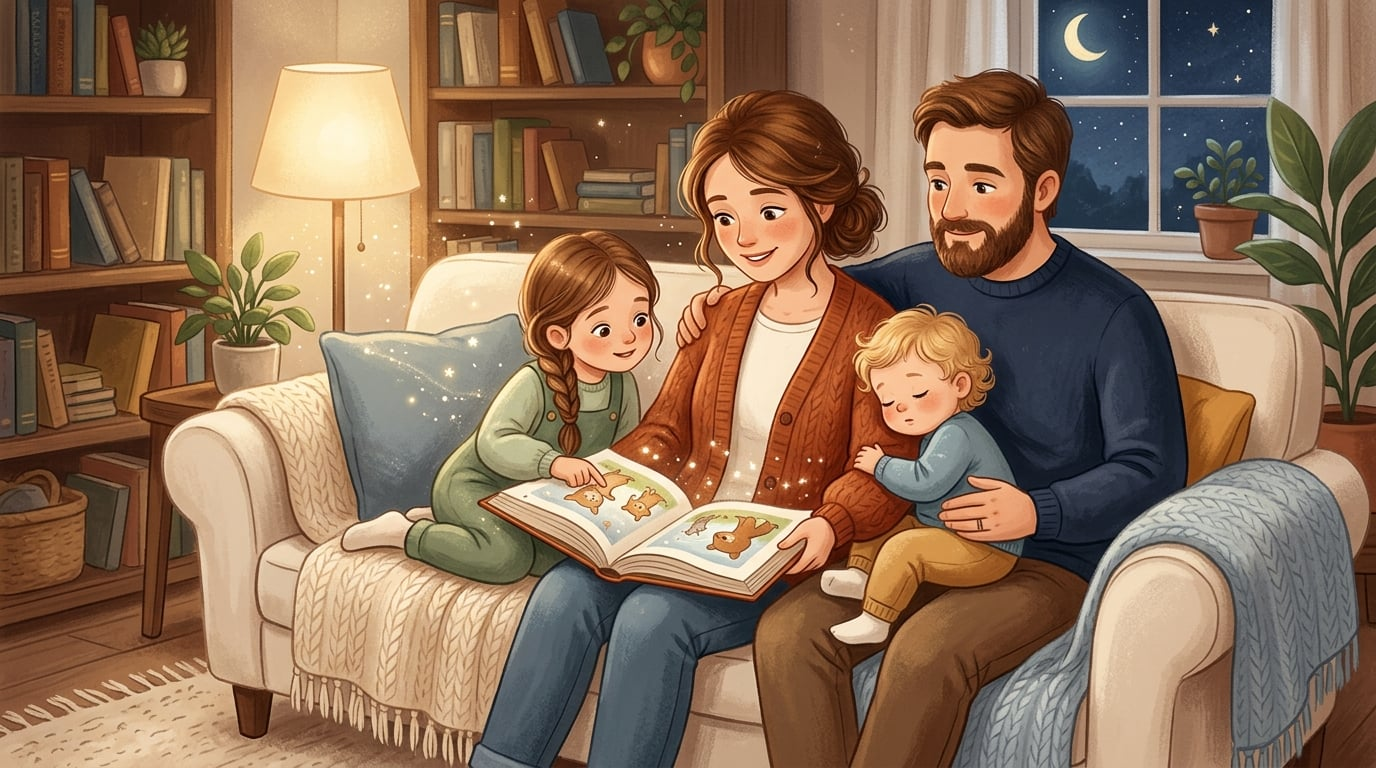
New-sibling stories work best when they make room for mixed feelings. A child can love a new baby and dislike a changed routine; the story can reassure them that there is still a place just for them.
New sibling stories for kids can hold two true things at once: a growing family can be exciting, and it can also feel disruptive or unfair. A gentle story lets the older child notice what has changed while hearing, again and again, that they still belong.
This guide keeps new sibling stories for kids practical: begin with one familiar detail, give the character one manageable challenge, and end with a return to safety or connection. The story is an invitation to talk, not a lesson a child has to pass.
Start with one small true thing
A good story prompt does not need to explain the whole situation. Choose one detail a child will recognize: a favorite backpack, a missing sock, a first ride on the bus, or a quiet moment before a new beginning. That detail helps the story feel seen without making it a replay of the day.
Keep names and family details minimal when you use an online tool. A nickname, a broad age range, and a favorite animal are usually enough. Avoid full names, schools, addresses, schedules, and anything another family member has not agreed to share.
A simple plan for tonight
1. Use a family of animals or an imaginary home so the story has a little distance from real life.
2. Name one change the older child notices, such as waiting longer or sharing a favorite grown-up.
3. Create one dependable connection in the ending: a special ritual, a one-on-one moment, or a familiar place.
Read the result before bedtime. Change wording that feels too intense, skip a scene that does not fit, or save the story for another night. The parent or caregiver remains the editor, storyteller, and best judge of the child in front of them.
Story starters to make your own
| Theme | Story starter |
|---|---|
| New baby | A fox family learns that the den has room for one more sleepy voice and one older fox with important ideas. |
| Changed routine | A bear misses the old morning routine, then helps create a new quiet breakfast tradition. |
| Jealous feeling | A young rabbit finds a way to say, “I want a turn too,” and a parent listens carefully. |
| Proud helper | A child chooses one small job they truly want, then gets to be a child again when the job is done. |
| Special time | Two penguins keep a weekly moon-walk that belongs only to them, even after the family grows. |
Use one prompt at a time. At bedtime, a small plot with a calm ending usually lands better than a long adventure with several problems to solve.
Make the story fit the child
Toddlers may need very simple language about sharing time and space. Preschoolers can enjoy practicing words for wanting attention. Older children can talk about responsibility and why they do not need to become a second parent to matter in the family.
For younger children, repeat a reassuring phrase and keep the cast small. For older children, let them suggest a helpful choice the character could make. If they want to change the ending, follow their lead; that is often the most meaningful part of shared storytelling.
Keep storytime gentle
Avoid making the older child the automatic helper or the always-happy example. They can help when they choose, and they also deserve ordinary play, comfort, and attention. Let the story validate rather than correct their first feelings.
If a child seems distressed, pause rather than pushing through the story. A calm conversation, a lighter book, or a familiar routine can be the better choice. For worries or changes that remain intense, persist, or interfere with everyday life, a pediatrician or qualified child mental-health professional can help a family decide on appropriate support.
To make a fresh version from tonight's details, try the StarryTalez story studio. You can also browse short bedtime story ideas or read our parent guide to AI story safety before sharing a story with a child.
Create a story from tonight's moment
Use one small detail from your child’s day, review the story together, and make it your own before bedtime.
Frequently asked questions
Should a new-sibling story say that the older child is the “big helper”?
It can mention a helpful choice, but avoid turning support into a job the child must perform. The story is stronger when the older child is valued for who they are, not only for how useful they can be.
What if my child says they want the baby to go away?
Treat the statement as a feeling to understand, not a reason to shame. Stay calm, set safe boundaries, and give the child words for the change they are experiencing. Seek added support if anger feels intense or unsafe.
Should I let my child choose the details?
Yes, when it feels comfortable. Offer two or three simple choices, such as an animal helper, a setting, or a kind ending. That keeps the process playful without asking a tired child to invent the whole story.
How long should the story be?
Match the length to the child and the evening. A short story that leaves room for a cuddle or a question is often more useful than a long story finished after everyone is already tired.
Can I use a real family situation?
You can use a broad version of a real moment, then make the story fictional. Keep private details out of prompts, preview the draft first, and choose a gentler topic if the real event is still too raw.
Story recommendations for tonight

The Goose Girl
A kind princess loses her royal identity after a greedy maid takes her place. While caring for a flock of geese, she remains honest and kind until the truth is revealed and she finally regains her rightful place.
3 min read
The Wild Swans
Princess Elisa sets out on a brave journey to save her eleven brothers, who have been turned into swans by an evil spell. Through love, patience, and unwavering determination, she breaks the curse and brings her family together again.
3 min read
Goodnight, Toy Friends
One by one, a child says goodnight to beloved toys and brings a busy day to a peaceful close.
3 min read