
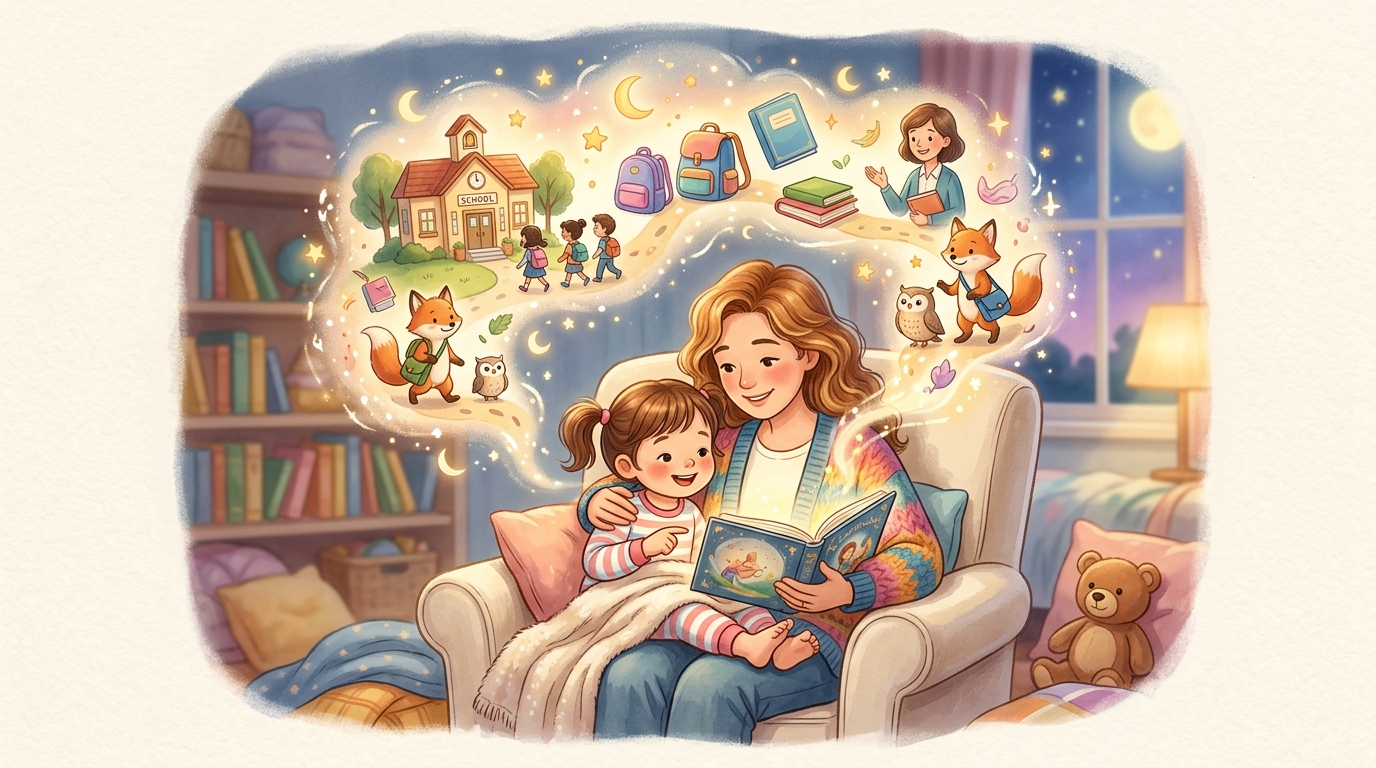
A school-start story does not need to erase nerves. Let the character feel both excited and unsure, meet one kind helper, and take one next step into a new routine.
First-day-of-school stories for kids can give a family a softer way to rehearse a big change. The most helpful plot is usually small: a character carries a familiar object, notices one friendly face, and learns that they can ask for help when they need it.
This guide keeps first-day-of-school stories for kids practical: begin with one familiar detail, give the character one manageable challenge, and end with a return to safety or connection. The story is an invitation to talk, not a lesson a child has to pass.
Start with one small true thing
A good story prompt does not need to explain the whole situation. Choose one detail a child will recognize: a favorite backpack, a missing sock, a first ride on the bus, or a quiet moment before a new beginning. That detail helps the story feel seen without making it a replay of the day.
Keep names and family details minimal when you use an online tool. A nickname, a broad age range, and a favorite animal are usually enough. Avoid full names, schools, addresses, schedules, and anything another family member has not agreed to share.
A simple plan for tonight
1. Start with a familiar school detail, such as a backpack, lunchbox, cubby, or bus stop.
2. Let the character feel two things at once: excited and nervous is a realistic pair.
3. Give the character one simple action, like finding a teacher, saying hello, or taking a slow breath with a grown-up.
Read the result before bedtime. Change wording that feels too intense, skip a scene that does not fit, or save the story for another night. The parent or caregiver remains the editor, storyteller, and best judge of the child in front of them.
Story starters to make your own
| Theme | Story starter |
|---|---|
| New classroom | A little rabbit finds its name on a cubby and meets a teacher who knows where the crayons live. |
| Bus ride | A child carries a tiny paper star in a pocket until the bus reaches school. |
| Making a friend | A shy fox notices another child building a block tower and asks to add one piece. |
| Separation | A penguin and parent make a special goodbye wave that works from anywhere. |
| After school | A tired bear comes home and tells one good thing, one hard thing, and one funny thing. |
Use one prompt at a time. At bedtime, a small plot with a calm ending usually lands better than a long adventure with several problems to solve.
Make the story fit the child
For younger children, stay close to concrete routines: goodbye, classroom, snack, pickup. Older children may benefit from a story that includes uncertainty about friendships, work, or a new building. Keep the solution realistic and small.
For younger children, repeat a reassuring phrase and keep the cast small. For older children, let them suggest a helpful choice the character could make. If they want to change the ending, follow their lead; that is often the most meaningful part of shared storytelling.
Keep storytime gentle
Avoid promising that every moment will be fun or that a child will never miss home. The story can model asking a teacher for help, using a practiced goodbye, and telling a caregiver about the day afterward.
If a child seems distressed, pause rather than pushing through the story. A calm conversation, a lighter book, or a familiar routine can be the better choice. For worries or changes that remain intense, persist, or interfere with everyday life, a pediatrician or qualified child mental-health professional can help a family decide on appropriate support.
To make a fresh version from tonight's details, try the StarryTalez story studio. You can also browse short bedtime story ideas or read our parent guide to AI story safety before sharing a story with a child.
Create a story from tonight's moment
Use one small detail from your child’s day, review the story together, and make it your own before bedtime.
Frequently asked questions
When should I read a first-day-of-school story?
A few nights before a change can be useful, but there is no need to rehearse endlessly. Read it when the child is receptive, and switch to ordinary stories if talking about school feels like too much.
What if my child says they do not want to go to school?
Listen first and ask a simple question about what feels hardest. A story can help you explore a small worry, but ongoing distress or school refusal is worth discussing with the child’s teacher, pediatrician, or another qualified professional.
Should I let my child choose the details?
Yes, when it feels comfortable. Offer two or three simple choices, such as an animal helper, a setting, or a kind ending. That keeps the process playful without asking a tired child to invent the whole story.
How long should the story be?
Match the length to the child and the evening. A short story that leaves room for a cuddle or a question is often more useful than a long story finished after everyone is already tired.
Can I use a real family situation?
You can use a broad version of a real moment, then make the story fictional. Keep private details out of prompts, preview the draft first, and choose a gentler topic if the real event is still too raw.
Story recommendations for tonight

The Sleepy Storybook
A well-loved storybook yawns along with the child and helps close the day.
4 min read
The Cloud That Loved Drawing
A child notices a cloud that seems to draw pictures across the sky and begins drawing too.
4 min read
Little Hedgehog Hid His Worries in the Stars
Little Hedgehog shares bedtime worries with the stars and feels a little lighter inside.
4 min read