
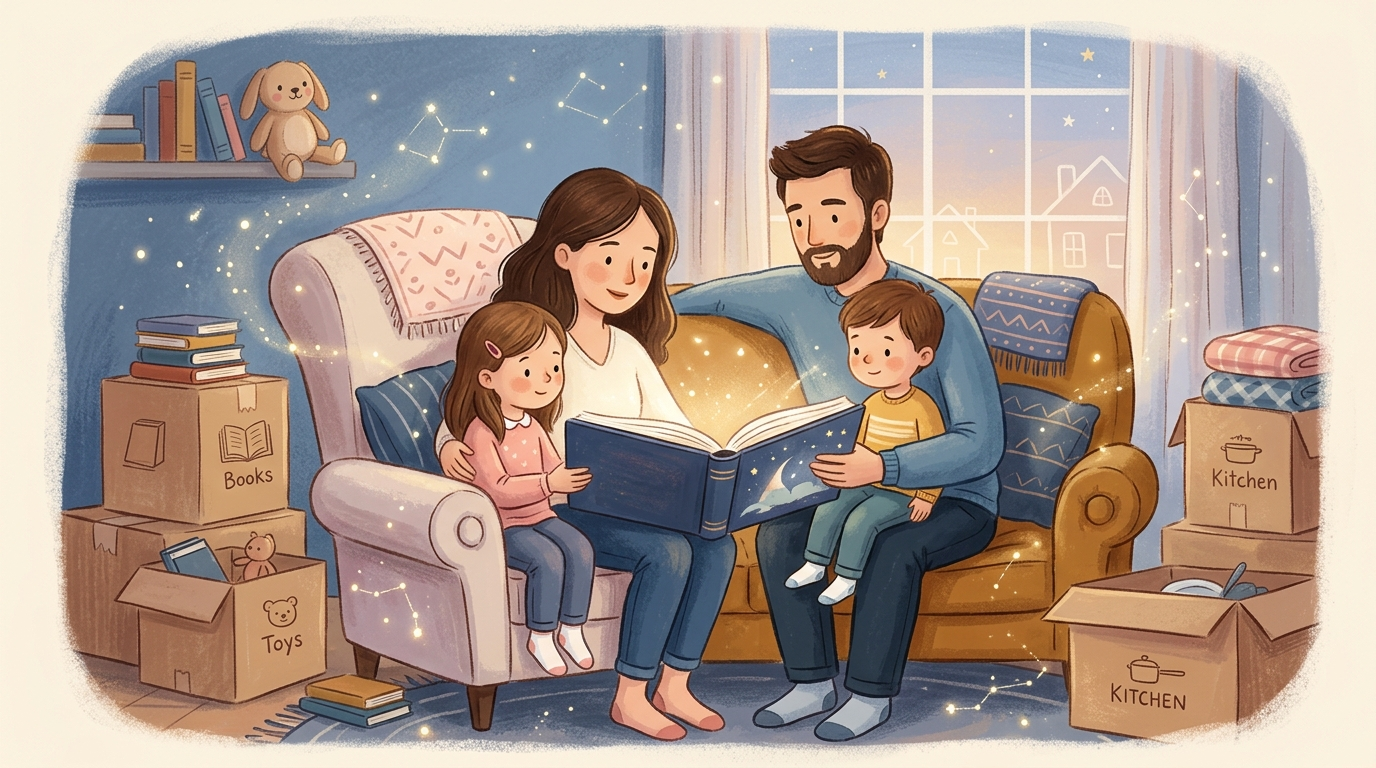
A moving story can honor what a child is leaving while making room for curiosity about what comes next. Use familiar objects and small routines to show that home can travel with the family.
Moving house with kids often comes with more feelings than adults expect: excitement, grief, curiosity, and a hundred practical questions. A story can slow the change down. It can show a character packing a familiar object, saying goodbye to a loved place, and discovering one small comfort in a new room.
This guide keeps moving house with kids practical: begin with one familiar detail, give the character one manageable challenge, and end with a return to safety or connection. The story is an invitation to talk, not a lesson a child has to pass.
Start with one small true thing
A good story prompt does not need to explain the whole situation. Choose one detail a child will recognize: a favorite backpack, a missing sock, a first ride on the bus, or a quiet moment before a new beginning. That detail helps the story feel seen without making it a replay of the day.
Keep names and family details minimal when you use an online tool. A nickname, a broad age range, and a favorite animal are usually enough. Avoid full names, schools, addresses, schedules, and anything another family member has not agreed to share.
A simple plan for tonight
1. Choose one familiar object that can travel with the character: a blanket, book, lamp, or stuffed animal.
2. Let the character say goodbye to one place or person they will miss.
3. End with one new-home ritual, such as choosing a reading corner or looking for the moon from a new window.
Read the result before bedtime. Change wording that feels too intense, skip a scene that does not fit, or save the story for another night. The parent or caregiver remains the editor, storyteller, and best judge of the child in front of them.
Story starters to make your own
| Theme | Story starter |
|---|---|
| Packing day | A child puts memories into imaginary boxes, then learns that the best ones can be carried in a heart. |
| Goodbye place | A little squirrel thanks its old tree for the shade, games, and rainy-day hiding spots. |
| New bedroom | A rabbit hangs one familiar picture and discovers that a new room can feel cozy slowly. |
| New neighborhood | A child follows a friendly cat to find the library, playground, and a quiet path home. |
| Keeping in touch | Two bird friends send moon postcards while they learn the names of new trees. |
Use one prompt at a time. At bedtime, a small plot with a calm ending usually lands better than a long adventure with several problems to solve.
Make the story fit the child
Young children often need a story focused on concrete routines: where they will sleep, what comes in the moving truck, and who will read the bedtime story. Older children may want space for leaving friends, changing schools, or having less control over the decision.
For younger children, repeat a reassuring phrase and keep the cast small. For older children, let them suggest a helpful choice the character could make. If they want to change the ending, follow their lead; that is often the most meaningful part of shared storytelling.
Keep storytime gentle
Do not force the story to frame every move as exciting. Let a character miss the old home and still find one new thing to like. Real photos, a goodbye drawing, and repeated bedtime routines can sit alongside the story.
If a child seems distressed, pause rather than pushing through the story. A calm conversation, a lighter book, or a familiar routine can be the better choice. For worries or changes that remain intense, persist, or interfere with everyday life, a pediatrician or qualified child mental-health professional can help a family decide on appropriate support.
To make a fresh version from tonight's details, try the StarryTalez story studio. You can also browse short bedtime story ideas or read our parent guide to AI story safety before sharing a story with a child.
Create a story from tonight's moment
Use one small detail from your child’s day, review the story together, and make it your own before bedtime.
Frequently asked questions
When should I start talking about a move through stories?
Start when there is a clear, age-appropriate plan to share. Repeat the story as details become known, but let ordinary books and routines continue too; children do not need every bedtime to be about the move.
Can a story help a child say goodbye to friends?
It can give language to the sadness and make room for a realistic connection plan, such as a drawing, call, or visit if that is possible. Do not promise that every friendship will stay exactly the same.
Should I let my child choose the details?
Yes, when it feels comfortable. Offer two or three simple choices, such as an animal helper, a setting, or a kind ending. That keeps the process playful without asking a tired child to invent the whole story.
How long should the story be?
Match the length to the child and the evening. A short story that leaves room for a cuddle or a question is often more useful than a long story finished after everyone is already tired.
Can I use a real family situation?
You can use a broad version of a real moment, then make the story fictional. Keep private details out of prompts, preview the draft first, and choose a gentler topic if the real event is still too raw.
Story recommendations for tonight

The Wild Swans
Princess Elisa sets out on a brave journey to save her eleven brothers, who have been turned into swans by an evil spell. Through love, patience, and unwavering determination, she breaks the curse and brings her family together again.
3 min read
A Whale Song Before Bed
A child imagines a faraway whale song drifting in like a lullaby before bed.
5 min read
The Night-Light That Stayed Awake
A small night-light promises to stay awake so the child can safely fall asleep.
3 min read