
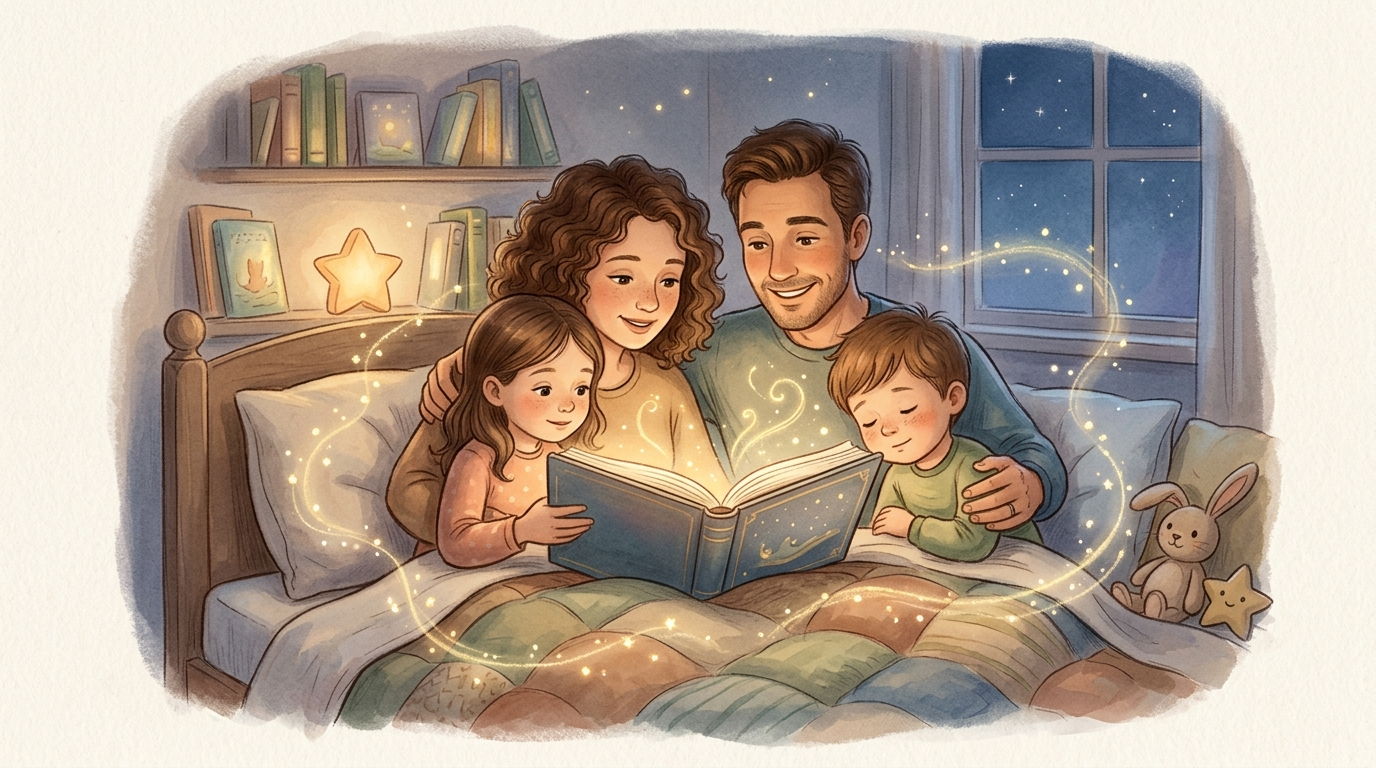
There is no single right length. Aim for a story that fits your child’s attention, your family’s routine, and the kind of night you are having; a short, connected reading is enough.
Parents asking how long should a bedtime story be are usually asking a bigger question: how can we make the evening feel settled without adding one more negotiation? The answer is flexible. A story should be long enough for connection and short enough to leave everyone feeling ready for the next step.
This guide keeps how long should a bedtime story be practical: begin with one familiar detail, give the character one manageable challenge, and end with a return to safety or connection. The story is an invitation to talk, not a lesson a child has to pass.
Start with one small true thing
A good story prompt does not need to explain the whole situation. Choose one detail a child will recognize: a favorite backpack, a missing sock, a first ride on the bus, or a quiet moment before a new beginning. That detail helps the story feel seen without making it a replay of the day.
Keep names and family details minimal when you use an online tool. A nickname, a broad age range, and a favorite animal are usually enough. Avoid full names, schools, addresses, schedules, and anything another family member has not agreed to share.
A simple plan for tonight
1. Choose a time boundary before you begin, such as one short story or ten quiet minutes.
2. Let the child choose between two books or two story ideas instead of opening a long menu.
3. End at a natural resting place, even if the book is not finished; you can return tomorrow.
Read the result before bedtime. Change wording that feels too intense, skip a scene that does not fit, or save the story for another night. The parent or caregiver remains the editor, storyteller, and best judge of the child in front of them.
Story starters to make your own
| Theme | Story starter |
|---|---|
| Two-minute tale | A sleepy mouse finds one warm mitten and curls up inside it. |
| Five-minute tale | A child helps three tiny lanterns find the path back to their garden. |
| Chapter pause | A brave squirrel reaches a safe campsite and saves the next adventure for tomorrow. |
| Repeatable ending | Every night, the moon checks that the house is quiet, warm, and loved. |
| Busy-night reset | A favorite toy whispers goodnight to each room before the lights go out. |
Use one prompt at a time. At bedtime, a small plot with a calm ending usually lands better than a long adventure with several problems to solve.
Make the story fit the child
Very young children may be content with a few pages or one repeated rhyme. Preschoolers often enjoy one short plot. Many school-age children can enjoy longer books, but tiredness matters more than an age label. Let the child’s cues decide whether to continue.
For younger children, repeat a reassuring phrase and keep the cast small. For older children, let them suggest a helpful choice the character could make. If they want to change the ending, follow their lead; that is often the most meaningful part of shared storytelling.
Keep storytime gentle
A longer story is not automatically a better ritual. If bedtime has become tense, shorten the reading, keep the order predictable, and choose a familiar story. The point is shared attention, not finishing a quota.
If a child seems distressed, pause rather than pushing through the story. A calm conversation, a lighter book, or a familiar routine can be the better choice. For worries or changes that remain intense, persist, or interfere with everyday life, a pediatrician or qualified child mental-health professional can help a family decide on appropriate support.
To make a fresh version from tonight's details, try the StarryTalez story studio. You can also browse bedtime stories by age or read our parent guide to AI story safety before sharing a story with a child.
Create a story from tonight's moment
Use one small detail from your child’s day, review the story together, and make it your own before bedtime.
Frequently asked questions
What if my child asks for one more story every night?
Validate the wish, then keep the boundary warm and predictable. You might say, “We are saving that one for tomorrow, and tomorrow will come quickly.” A consistent closing ritual can make the transition easier.
Is it okay to stop reading before the end of a chapter?
Yes. Choose a gentle pause point and tell the child when you will return to it. A bookmark, a brief recap, or a “tomorrow we find out” sentence can make the pause feel like part of the ritual.
Should I let my child choose the details?
Yes, when it feels comfortable. Offer two or three simple choices, such as an animal helper, a setting, or a kind ending. That keeps the process playful without asking a tired child to invent the whole story.
How long should the story be?
Match the length to the child and the evening. A short story that leaves room for a cuddle or a question is often more useful than a long story finished after everyone is already tired.
Can I use a real family situation?
You can use a broad version of a real moment, then make the story fictional. Keep private details out of prompts, preview the draft first, and choose a gentler topic if the real event is still too raw.
Story recommendations for tonight
The Tiny Moon Train
A moonlit train helps carry sleepy yawns, blankets, and dreams gently toward bedtime.
4 min read
Vasilisa the Beautiful
A kind and hardworking girl named Vasilisa journeys into a mysterious forest to seek a magical light. With courage, wisdom, and her mother's loving guidance, she overcomes every challenge and finds her own strength.
3 min read
The Wild Swans
Princess Elisa sets out on a brave journey to save her eleven brothers, who have been turned into swans by an evil spell. Through love, patience, and unwavering determination, she breaks the curse and brings her family together again.
3 min read